
 |
Activities
Student Organizations
Math Club
BingAWM
Actuarial Association
Welcome to the Homepage of
Department of Mathematics and Statistics
Calculus at Binghamton Check out the Problem of the Week.
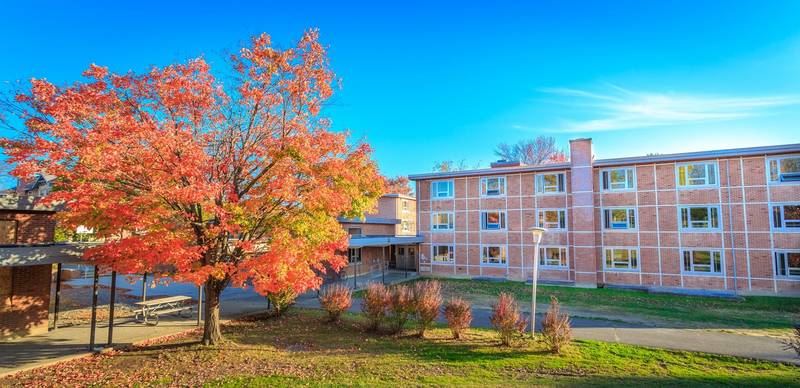
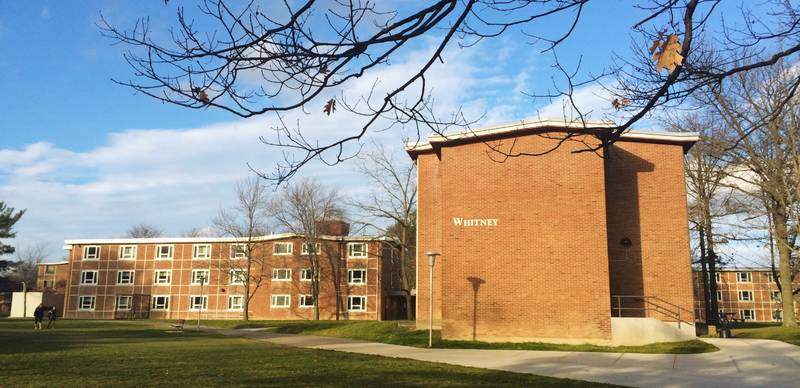
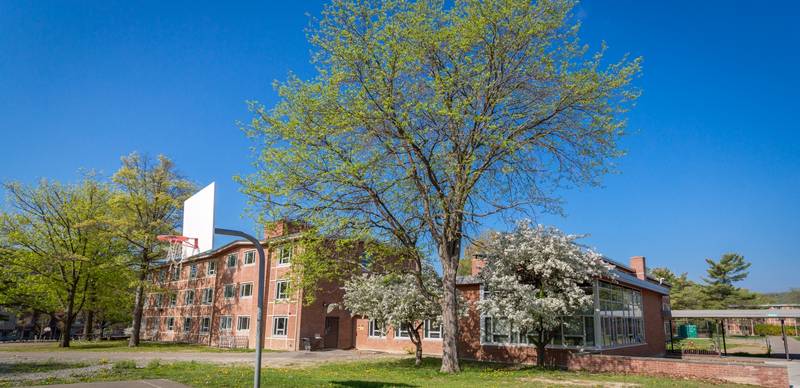
The Department of Mathematics and Statistics (DOMS) is a vibrant community where mathematicians and statisticians converge to explore, innovate, and educate. We offer a comprehensive range of academic programs, spanning the bachelor's, master's, and doctoral levels. Thus, besides our faculty and postdoctoral visitors, our community includes a large and valuable cadre of hard-working and talented undergraduate and graduate students.
At the undergraduate level, we offer two degree options in Mathematical Sciences: the Bachelor of Arts (BA) (more flexible) and the Bachelor of Science (BS) (more intensive).
Within each degree, students can choose one of three tracks: Mathematics, Data Science & Statistics (DSS), or Actuarial Science. We also offer a Mathematics minor.
At the graduate level, we have the PhD in Mathematical Sciences, Master of Arts (MA) in Mathematics, and MS in Data Science & Statistics degrees. The latter includes a 4+1 program in which students can earn a BA or BS in Mathematical Sciences alongside a master's degree in data science and statistics within five years.
While our highest degree is a PhD in Mathematical Sciences, a significant number of our doctoral dissertations are written on research topics in Data Science and Statistics.
All faculty members and postdoctoral visitors are active researchers. The main areas of concentration in the department are: Algebra, Analysis, Combinatorics, Data Science and Statistics and Geometry/Topology. Additionally, there is active research that falls between and bridges the main areas. See the Research Areas page for more specific research topics.
The photos above were taken by Jinghao Li, Ph.D. 15'.
A new track in Statistics will soon be added to the Bachelor of Arts in Mathematical Sciences degree. Statistics is the discipline that concerns the collection, organization, analysis, interpretation and presentation of data. The BA track in Statistics is designed to provide a solid mathematical and statistical foundation for a successful career in statistics, data analysis and data science. To obtain a BA degree in Mathematical Sciences with a Statistics track, a student must complete 50 credits of coursework in the field of Mathematical Sciences as follows:
Detailed major requirements will be found in the 2020 University Bulletin. Inquiries should be sent to the Director of Undergraduate Studies.
As usual, to declare or drop a major or minor in the Department of Mathematical Sciences, fill in this Google Form.
With sadness we announce the passing, on March 13, 2020, of our friend and colleague David Lee Hanson.
Dave grew up in Kansas, did his undergraduate work at MIT, and received his PhD degree in probability at Indiana University under the direction of J. R. Blum. Mathematical Reviews lists authorship or co-authorship of 54 research papers.
The enormous development of SUNY in the 1960's led to a fundamental change in the role of our department. Prior to 1968 it was an undergraduate teaching department, but starting in that year its mission was enlarged, making it also a graduate and research department. As part of that development, Dave was hired 1973 as a “leading professor”. He was an early architect and supporter of our entry into the field of statistics, still to this day a major component of our program.
At a difficult time in the department's development - a time marked by strong disagreements among faculty members - Dave took on the arduous role of Department Chair in 1983. He remained in that role for the next sixteen years, steering the department through those difficulties.
Binghamton University's transition from being a liberal arts college to being a research university was slow and not always easy. Perhaps Dave's greatest achievement during his long chairmanship was his success at guiding the deans of that period on how a research mathematical sciences department should be structured.
Long after his retirement he also continued to teach a course each semester right up to two weeks ago.
In his retirement Dave served several terms as an elected member of the Vestal School Board.
His wife Alison passed away last Fall. He is survived by his three daughters and one son.
The 2020 Peter Hilton Memorial Lecture will be postponed to Fall 2020 due to the COVID-19 outbreak. Stay tune for our updates.
Robert Gompf, University of Texas at Austin will give the annual Peter Hilton Memorial Lecture for 2020. The lecture will be given on Thursday April 30, 2020 at 3:00 p.m. in Lecture Hall 9. Prof. Gompf is the Jane and Roland Blumberg Centennial Professor in Mathematics at the University of Texas at Austin. For more see: https://web.ma.utexas.edu/users/gompf/
The lecture will be followed by a reception at 4:15 p.m. in The President's Reception Room, Anderson Performing Arts Center, Binghamton University. This reception is for the whole Binghamton Mathematics Community as well as for our visitors.
Peter Hilton Memorial Lecture is an annual event in memory of Peter Hilton, 1923-2010, a member of the Binghamton Mathematics Department from 1982 until his death in November 2010. He was an internationally famous member of the mathematical community. His contributions included a major role in the code-breaking operation at Bletchley Park during World War II, where he worked with Alan Turing, and important research contributions to topology, homological algebra, elementary number theory, combinatorics, and polyhedral geometry, as well as mathematics education at all levels. A collection of memoirs by people who knew Peter has been published in the December 2011 issue of Notices of the American Mathematical Society.
Peter gave a talk to the department about his wartime codebreaking. You can watch it here.
Binghamton University Graduate Conference in Algebra and Topology (BUGCAT)
The 12th Annual Binghamton University Graduate Conference in Algebra and Topology (BUGCAT) is to be held at Binghamton University, November 2nd and 3rd, 2019.
This year's featured keynotes are Profs. Matthias Beck from San Francisco State University, Johnathan Barmak from la Universidad de Buenos Aires, and Marcelo Aguiar from Cornell University.
Visit the conference home page (to be updated) and the conference Facebook Page, or e-mail gradconf@math.binghamton.edu for more information.
A Fall Sectional Meeting of the American Mathematical Society will take place at Binghamton University, Oct. 12-13, 2019, hosted by our department. Here is a link to important information about the meeting from the AMS website: Sectional AMS Meeting Information.
For visitors coming to our campus, we have modified a detailed campus map to show where the talks will be held, where to park, and where the reception will be held on Saturday, Oct. 12, 6:00-7:30 PM. Here is a link to the map as a pdf file: Binghamton University Campus Map for AMS Visitors.
After parking in lot M2, please come to the Lecture Hall building. In the lobby area near Lecture Hall 2, you will find the AMS registration desk. The AMS Book Sale will be located in Lecture Hall 3, as well as an Exhibition and Sale of mathematical artwork by Alex Feingold. The invited addresses will be in Lecture Hall 2. Special sessions will be located in other Lecture Hall rooms and in the Student (Classroom) Wing building attached to the Lecture Hall.
Once you know the room in which your talk will be given, you may learn more about the room and its available technology on the following EdComm Website. Once you are on that page, find the room in either the list of Lecture Hall rooms, or Classroom Wing rooms. Note that the Classroom Wing is marked as the Student Wing on the campus map available above. In most rooms, VGA and/or HDMI cable connections are available for your laptop, allowing you to project slides. The system controlling projectors should be turned on before the first talk each day by volunteers from our department, but you can view video tutorials about those controllers at the bottom of the following webpage: AV Tutorial Videos. The second tutorial about ``Laptop Ready Basic Instructions” is especially relevant to speakers and organizers of special sessions in the classrooms.
Here is a summary of the situation for presentations in each room. Every room has projectors and at least one screen if you wish to project slides from your computer. Only five laptops will be available for use if needed, so bring your own. All the rooms being used in the Lecture Hall (LH-4, 5, 11, 12, 13) have a glass whiteboard at the front of the room and a blackboard on the side wall. In the Classroom Wing, Rooms CW-108, 110, 212 and 214 have only writable walls requiring a dry erase marker. Rooms CW-305 and 307 have both a whiteboard and a blackboard. Rooms CW-321, 323, 325, 327, 329 and 331 have only a blackboard at the front of the room. Dry erase markers and erasers will be available at the AMS Registration Table, but those supplies should be returned at the end of the day to that Table to be ready if needed for the next day.
<< Newer entries | Older entries >>
Click here for the full news archive.
Suggestions and comments about the website can be sent to webmaster@math.binghamton.edu