
 |
Activities
Student Organizations
Math Club
BingAWM
Actuarial Association
Welcome to the Homepage of
Department of Mathematics and Statistics
Calculus at Binghamton Check out the Problem of the Week.



The Department of Mathematics and Statistics (DOMS) is a vibrant community where mathematicians and statisticians converge to explore, innovate, and educate. We offer a comprehensive range of academic programs, spanning the bachelor's, master's, and doctoral levels. Thus, besides our faculty and postdoctoral visitors, our community includes a large and valuable cadre of hard-working and talented undergraduate and graduate students.
At the undergraduate level, we offer two degree options in Mathematical Sciences: the Bachelor of Arts (BA) (more flexible) and the Bachelor of Science (BS) (more intensive).
Within each degree, students can choose one of three tracks: Mathematics, Data Science & Statistics (DSS), or Actuarial Science. We also offer a Mathematics minor.
At the graduate level, we have the PhD in Mathematical Sciences, Master of Arts (MA) in Mathematics, and MS in Data Science & Statistics degrees. The latter includes a 4+1 program in which students can earn a BA or BS in Mathematical Sciences alongside a master's degree in data science and statistics within five years.
While our highest degree is a PhD in Mathematical Sciences, a significant number of our doctoral dissertations are written on research topics in Data Science and Statistics.
All faculty members and postdoctoral visitors are active researchers. The main areas of concentration in the department are: Algebra, Analysis, Combinatorics, Data Science and Statistics and Geometry/Topology. Additionally, there is active research that falls between and bridges the main areas. See the Research Areas page for more specific research topics.
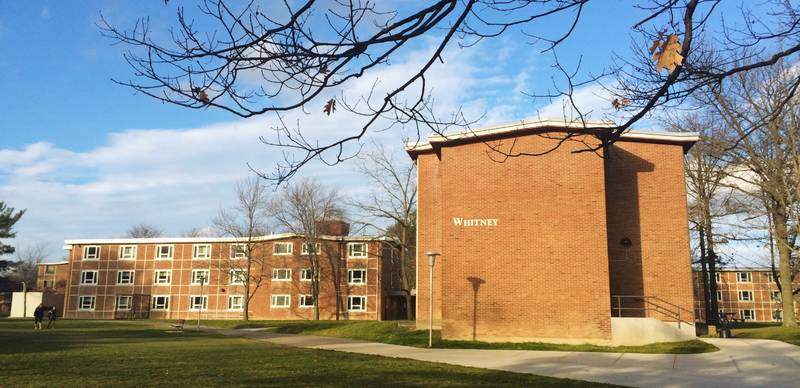
The photos above were taken by Jinghao Li, Ph.D. 15'.
Phi Beta Kappa Visiting Scholar Prof. Ken Ono (Jefferson Professor of Mathematics, University of Virginia), (virtually) visited Binghamton University to give three talks, two on Thursday, March 11, and one on Friday, March 12, 2021. The titles and abstracts for these talks are below, and links to the Panopto recordings for each one are posted below. The public talk was aimed at a general audience was open to the entire Binghamton community.
Ken Ono is the Thomas Jefferson Professor of Mathematics at the University of Virginia and the Vice President of the American Mathematical Society. He earned his PhD from UCLA in 1993, and he has published several monographs and over 180 research and popular articles in number theory, combinatorics and algebra. Professor Ono has received many awards for his research, including a Guggenheim Fellowship, a Packard Fellowship and a Sloan Fellowship. He was awarded a Presidential Early Career Award for Science and Engineering (PECASE) by Bill Clinton in 2000 and he was named the National Science Foundation's Distinguished Teaching Scholar in 2005. He was also an associate producer of the 2016 Hollywood film “The Man Who Knew Infinity,” which starred Jeremy Irons and Dev Patel.
Thursday, March 11, 2021 at 2:50-3:50 Math Club Talk (for all undergraduates interested in math):
Title: What is the Riemann Hypothesis, and why does it matter?
Abstract. The Riemann hypothesis provides insights into the distribution of prime numbers, stating that the nontrivial zeros of the Riemann zeta function have a “real part” of one-half. A proof of the hypothesis would be world news and fetch a $1 million Millennium Prize. In this lecture, Ken Ono will discuss the mathematical meaning of the Riemann hypothesis and why it matters. Along the way, he will tell tales of mysteries about prime numbers and highlight new advances.
Here is a link to a Panopto recording of Ken Ono's Math Club Talk for undergraduates.
Thursday, March 11, 2021 at 4:30-5:30 Colloquium Talk:
Title: Gauss’ Class Number Problem
Abstract. In 1798 Gauss wrote Disquisitiones Arithmeticae, the first rigorous text in number theory. This book laid the groundwork for modern algebraic number theory and arithmetic geometry. Perhaps the most important contribution in the work is Gauss's theory of integral quadratic forms, which appears prominently in modern number theory (sums of squares, Galois theory, rational points on elliptic curves,L-functions, the Riemann Hypothesis, to name a few). Despite the plethora of modern developments in the field, Gauss’s first problem about quadratic forms has not been optimally resolved. Gauss's class number problem asks for the complete list of quadratic form discriminants with class number h. The difficulty is in effective computation, which arises from the fact that the Riemann Hypothesis remains open. To emphasize the subtlety of this problem, we note that the first case, where h=1, remained open until the 1970s. Its solution required deep work of Heegner and Stark, and the Fields medal theory of Baker on linear forms in logarithms. Unfortunately, these methods do not generalize to the cases where h>1. In the 1980s, Goldfeld, and Gross and Zagier famously obtained the first effective class number bounds by making use of deep results on the Birch and Swinnerton-Dyer Conjecture. This lecture will tell the story of Gauss’s class number problem, and will highlight new work by the speaker and Michael Griffin that offers new effective results by different (and also more elementary) means.
Here is a link to a Panopto recording of Ken Ono's Colloquium Talk.
Friday, March 12, 2021 at 4:00-5:00, Public Lecture:
Title: Why does Ramanujan, “The Man Who Knew Infinity”, matter?
Abstract: This lecture is about Srinivasa Ramanujan, “The Man Who Knew Infinity.” Ramanujan was a self-trained two-time college dropout who left behind 3 notebooks filled with equations that mathematicians are still trying to figure out today. He claimed that his ideas came to him as visions from an Indian goddess. This lecture gives many reasons why Ramanujan matters today. The answers extend far beyond his legacy in science and mathematics. The speaker was an Associate Producer of the film “The Man Who Knew Infinity” (starring Dev Patel and Jeremy Irons) about Ramanujan. He will share several clips from the film in the lecture, and will also tell stories about the production and promotion of the film.
Here is a link to a Panopto recording of Ken Ono's Public Talk on Ramanujan.
The 2019 Norbert Wiener Prize in Applied Mathematics was awarded to Marsha Berger for her fundamental contributions to adaptive mesh refinement (AMR) and to Cartesian mesh techniques for automating the simulation of compressible flows in complex geometry.
Berger received her B.S. in mathematics from State University of New York at Binghamton in 1974. She went on to receive an M.S. and a Ph.D in computer science from Stanford University in 1978 and 1982, respectively. Marsha Berger is currently a Silver Professor in the Computer Science Department at the Courant Institute of Mathematical Sciences at NYU. She is a frequent visitor to NASA Ames, where she has spent every summer since 1990, and several sabbaticals. Her honors include membership in the National Academy of Sciences, the National Academy of Engineering, and the American Academy of Arts and Sciences. She is a Fellow of the Society for Industrial and Applied Mathematics. Berger was a recipient of the IEEE Fernbach award, and was part of the team that won the 2002 Software of the Year Award from NASA for its Cart3D software.
Marsha Berger is one of the inventors of AMR algorithms, used in solving partial differential equations to improve the accuracy of a solution by locally and dynamically resolving complex features of a simulation. Berger provided the mathematical foundations, algorithms, and software that made it possible to solve many otherwise intractable simulation problems, including those related to blood flow, climate modeling, and galaxy simulation. Her mathematical contributions include local error estimators to identify where refinement is needed, stable and conservative grid interface conditions, and embedded boundary and cut-cell methods. She is part of the team that created CART3D, a NASA code based on her AMR algorithms that is used extensively for aerodynamic simulations, and which was instrumental in understanding the Columbia Space Shuttle disaster. She also helped build GeoClaw, an open source software project for ocean-scale wave modeling. It is used to simulate tsunamis, debris flows and dam breaks, among other applications.
With sadness we report the passing on November 18, 2020 of Professor Emeritus Louis F. McAuley.
Louis was born in 1924 in Travelers Rest, South Carolina to Stephen Floyd and Floree Cox McAuley. He served in the army in WWII in Italy at age 19. He studied at Mars Hill Jr. College, received his Bachelor's Degree at Oklahoma State University, and his Doctorate in Mathematics at the University of North Carolina.
He was a member of the mathematics departments at the University of Maryland, the University of Wisconsin, Rutgers University, and at the State University of New York at Binghamton. He also spent time as a visitor at Louisiana State University, the Institute for Advanced Study at Princeton, and Istanbul Bilgi University in Istanbul, Turkey.
At SUNY Binghamton he served as Chairman of the Department of Mathematical Sciences from 1969 -1978, and was instrumental in developing the graduate program. He directed the doctoral work of 21 students who received PhD's in Mathematics and went on to successful careers in teaching and research.
He was predeceased by his parents, his first wife Ionene McAuley, his brother Van, and his sister Harriett. Louis is survived by his three sons John Devin, Louis Kirk, and Jeff Cox, their mother Patricia McAuley, and his longtime partner Kathryn Espe, as well as his niece Charlotte Poole and nephew Stephen McCall.
With sadness we report the passing on May 24, 2020 of Professor Emeritus Erik Kjær Pedersen, our friend and colleague.
Erik grew up in the Jutland Peninsula of his native Denmark. He received his Masters Degree with emphasis in topology at Aarhus University, then the leading mathematics center in Denmark. He moved on to doctoral studies at the University of Chicago, receiving his PhD in 1974 under the direction of Richard Lashof. He had a considerable reputation in research mathematics as author or coauthor of more than sixty research papers in leading journals.
Erik returned to Denmark and spent a significant part of his career at Odense University before moving to the United States in 1990. That was when he was recruited by the Mathematical Sciences Department at Binghamton as part of an innovative SUNY program called the Graduate Research Initiative, intended to advance the research profiles of the four SUNY centers. He remained in our department until the end of 2006 when he answered the call to return to Denmark as head of the mathematical sciences department at the University of Copenhagen.
While at Binghamton, Erik had a considerable and highly positive influence on the ethos of our department. He increased our profile, organized important conferences, and in his two terms as Department Chair provided strong leadership. Nobody ever called Erik Pedersen mild-mannered. His personality filled the room.
Michael Sorensen, Head of the Mathematical Sciences Department, University of Copenhagen writes: “It is with great sadness that I have to inform you that Erik Kjær Pedersen died earlier today at a hospital in Florida after a long illness. Last summer, it was found that Erik had a brain tumor. After an operation he got relatively well, but unfortunately the improvement did not last.
“Erik, as Head of [the Copenhagen] Department for 10 years, played an absolutely invaluable role both for the department and for Danish mathematics. During his time as Head of Department, MATH's international standing was very significantly improved so that we can now compete with the best European departments. The number of external grants, many of them very prestigious, exploded. The same is true of the number of PhD students and postdocs. In addition, Erik ensured that the department is financially sound and has considerable savings.”
Erik Kjær Pedersen is survived by his wife Inger Stricker Pedersen, their three children, and several grandchildren.
A new track in Statistics will soon be added to the Bachelor of Arts in Mathematical Sciences degree. Statistics is the discipline that concerns the collection, organization, analysis, interpretation and presentation of data. The BA track in Statistics is designed to provide a solid mathematical and statistical foundation for a successful career in statistics, data analysis and data science. To obtain a BA degree in Mathematical Sciences with a Statistics track, a student must complete 50 credits of coursework in the field of Mathematical Sciences as follows:
Detailed major requirements will be found in the 2020 University Bulletin. Inquiries should be sent to the Director of Undergraduate Studies.
As usual, to declare or drop a major or minor in the Department of Mathematical Sciences, fill in this Google Form.
<< Newer entries | Older entries >>
Click here for the full news archive.
Suggestions and comments about the website can be sent to webmaster@math.binghamton.edu